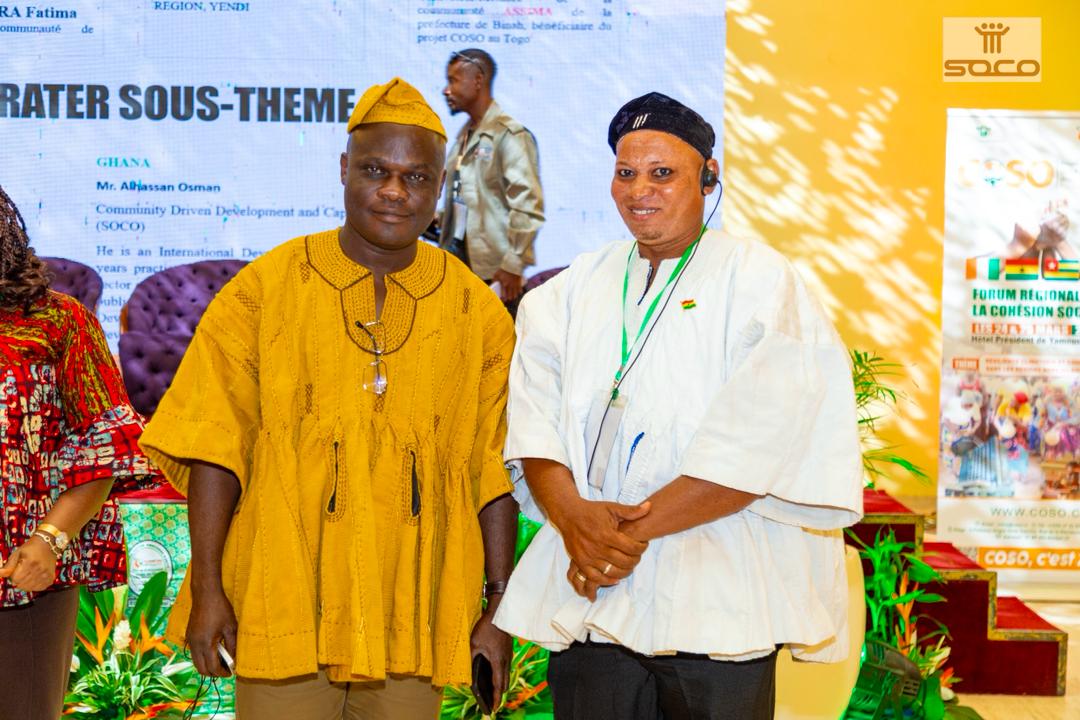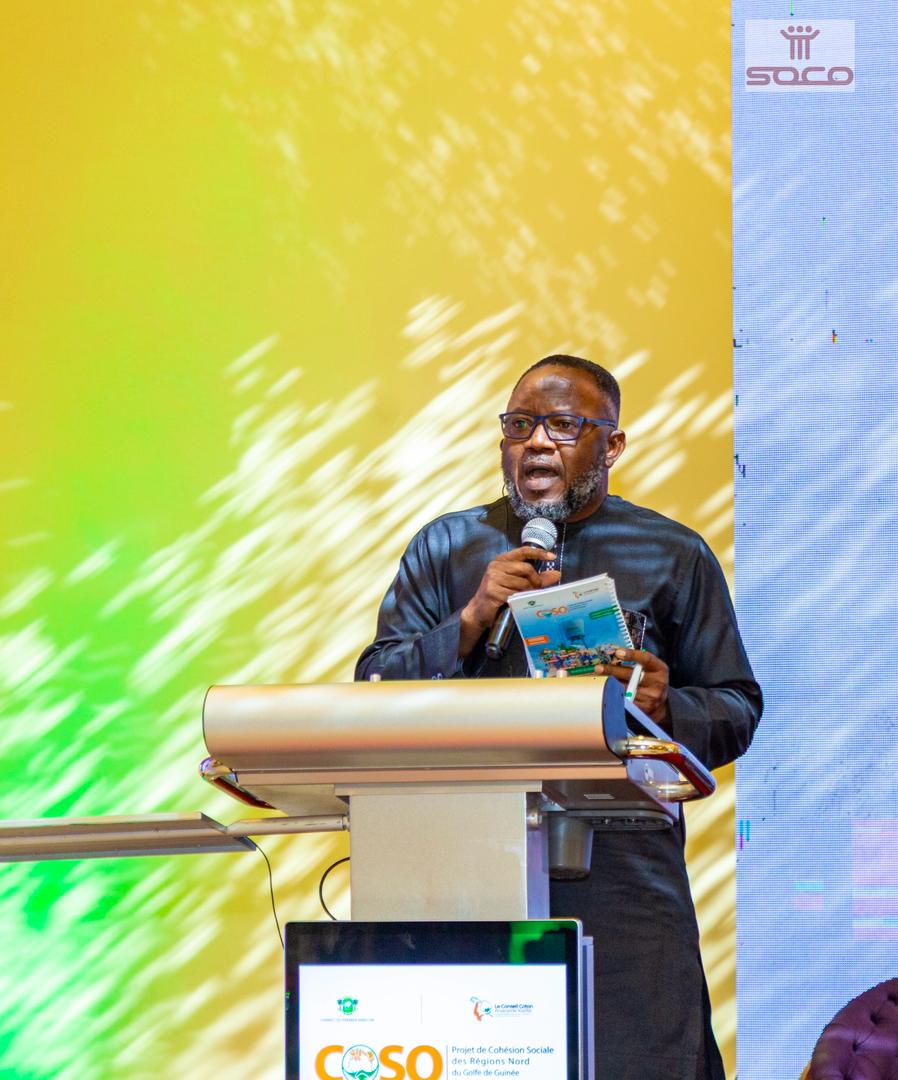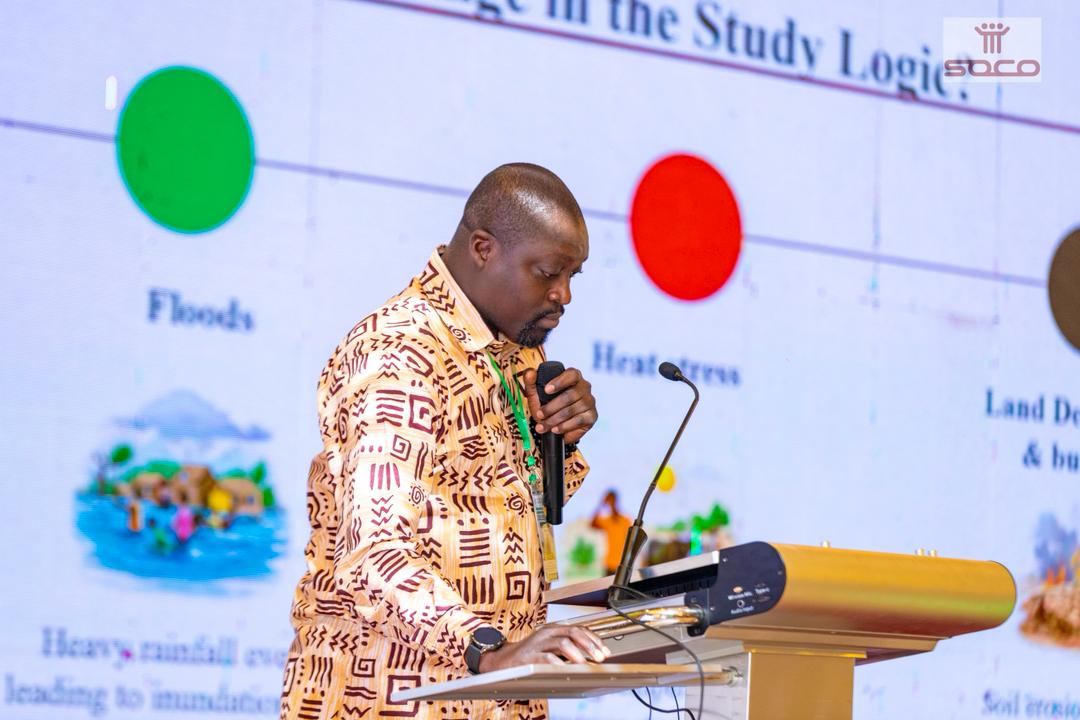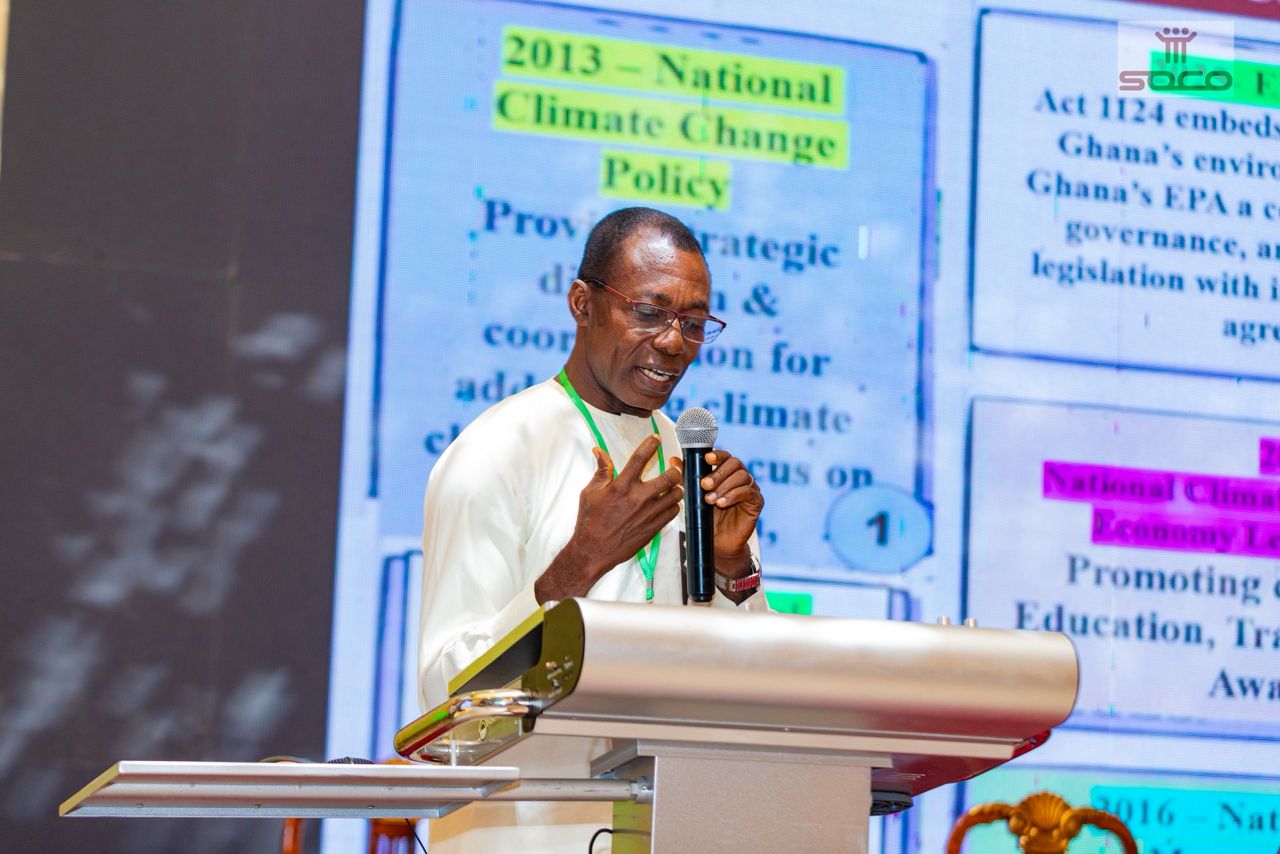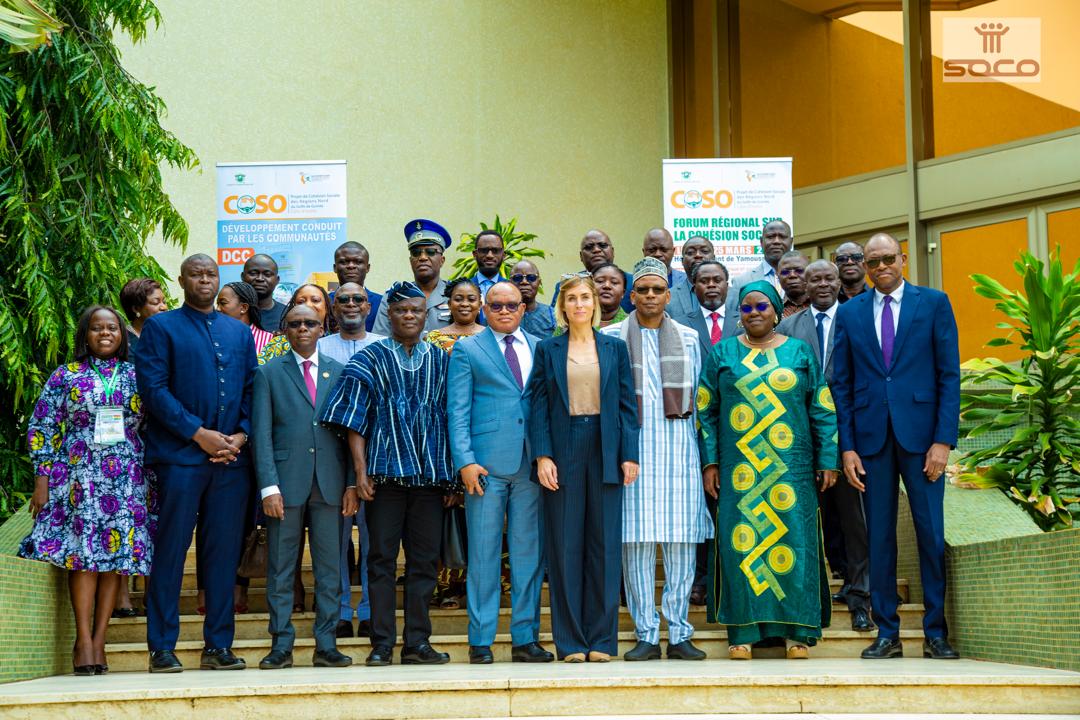
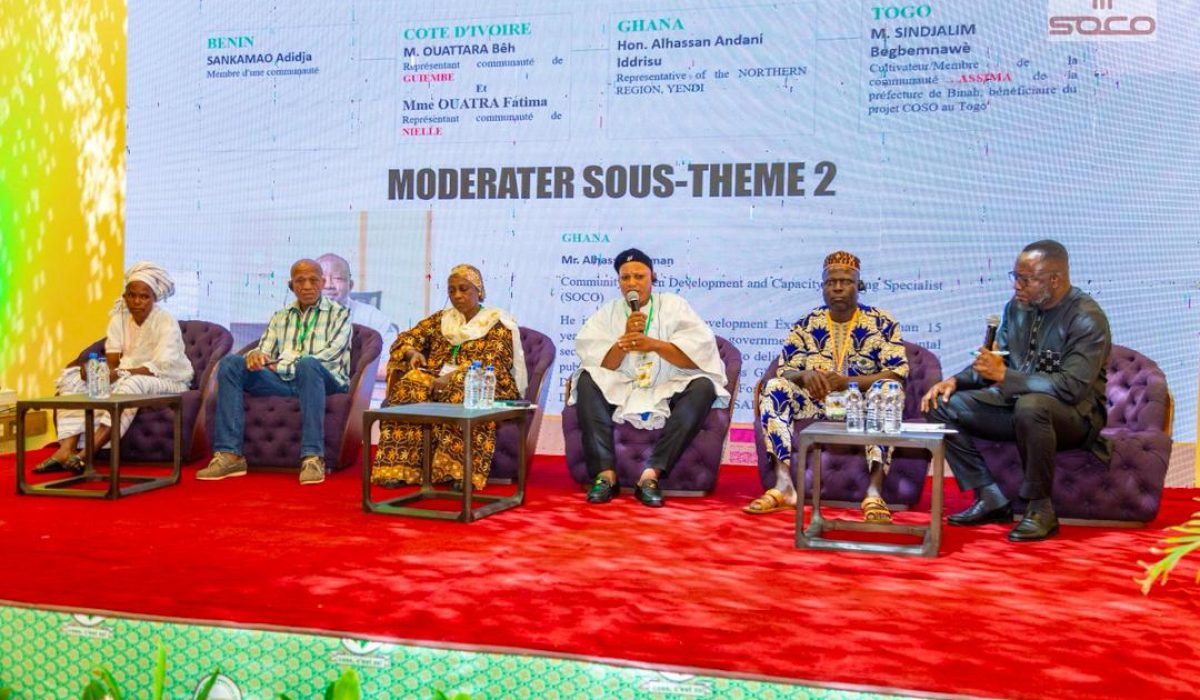
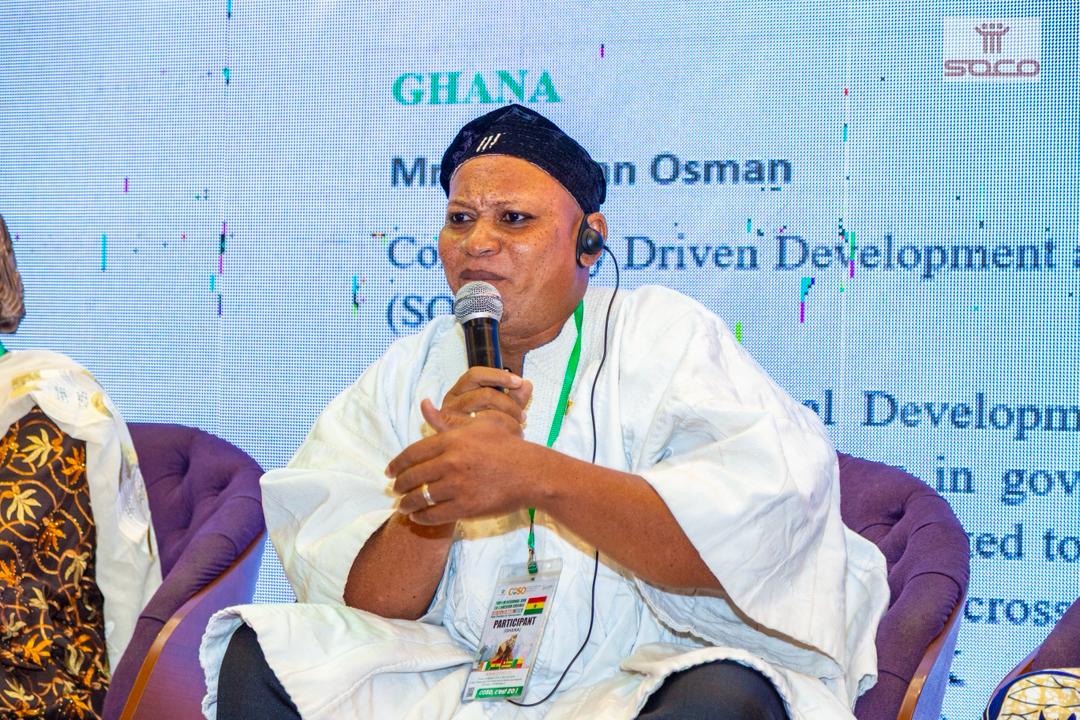
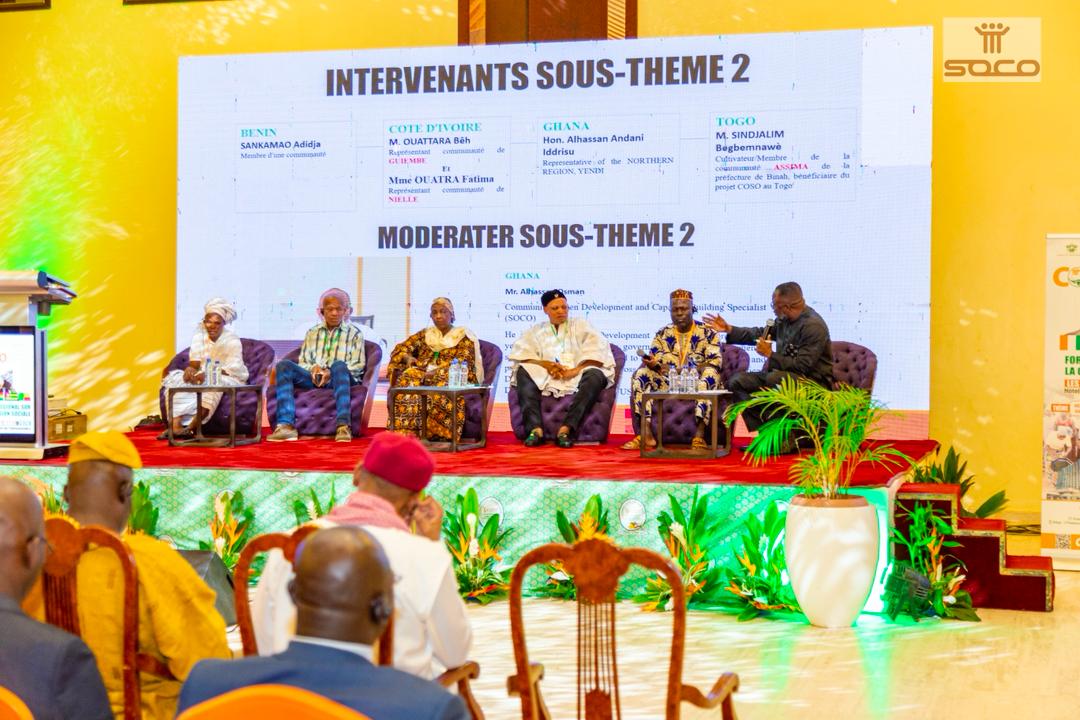
The SOCO Regional Conference 2026, held in Yamoussoukro, Côte d’Ivoire, brought together community members to speak about how climate change is affecting their lives. The session, moderated by Osman Alhassan, Community-Driven Development Specialist of the SOCO Project – Ghana, focused on the experiences of farmers and local leaders from Ghana, Benin, Côte d’Ivoire, and Togo.
From the start, the tone was clear. The conversation was about what border people are going through in their communities. Alhassaan Andani, Assembly Member for the Umrania Electoral Area in the Yendi Municipality and a maize farmer, spoke on behalf of beneficiary communities in Northern Ghana. He explained how changes in rainfall have affected farming in his area. “We used to know when the rains would come,” he said. “You could plan your farming season. Now, the rains delay, or they come and stop suddenly. Sometimes you plant, and nothing grows.”
He spoke about a recent season where the rains came late and ended early. Farmers planted as usual, but the crops did not grow well. Even improved seeds did not perform as expected. “I planted hybrid maize, which normally gives good yields,” he said. “But because the rains were not stable, the crops did not do well. The yield was very low.”
For farmers like Andani, this was worrying. Hybrid seeds are usually more productive when conditions are right. But in this case, the changing weather affected the outcome. “Some of us didn’t even get back what we put in,” he added. “When that happens, it affects everything, food, school fees, even how you take care of your family.”
Participants from the other countries shared similar experiences. A farmer from Benin spoke about dry spells that interrupt planting and reduce harvests. A community representative from Côte d’Ivoire described how rainfall has become difficult to predict, making it hard to plan farming activities. From Togo, a participant spoke about how farmers now have to adjust constantly, often without enough support. Across the discussion, one issue kept coming up, rainfall is no longer reliable. Farming has become uncertain, and this is affecting income and daily life.

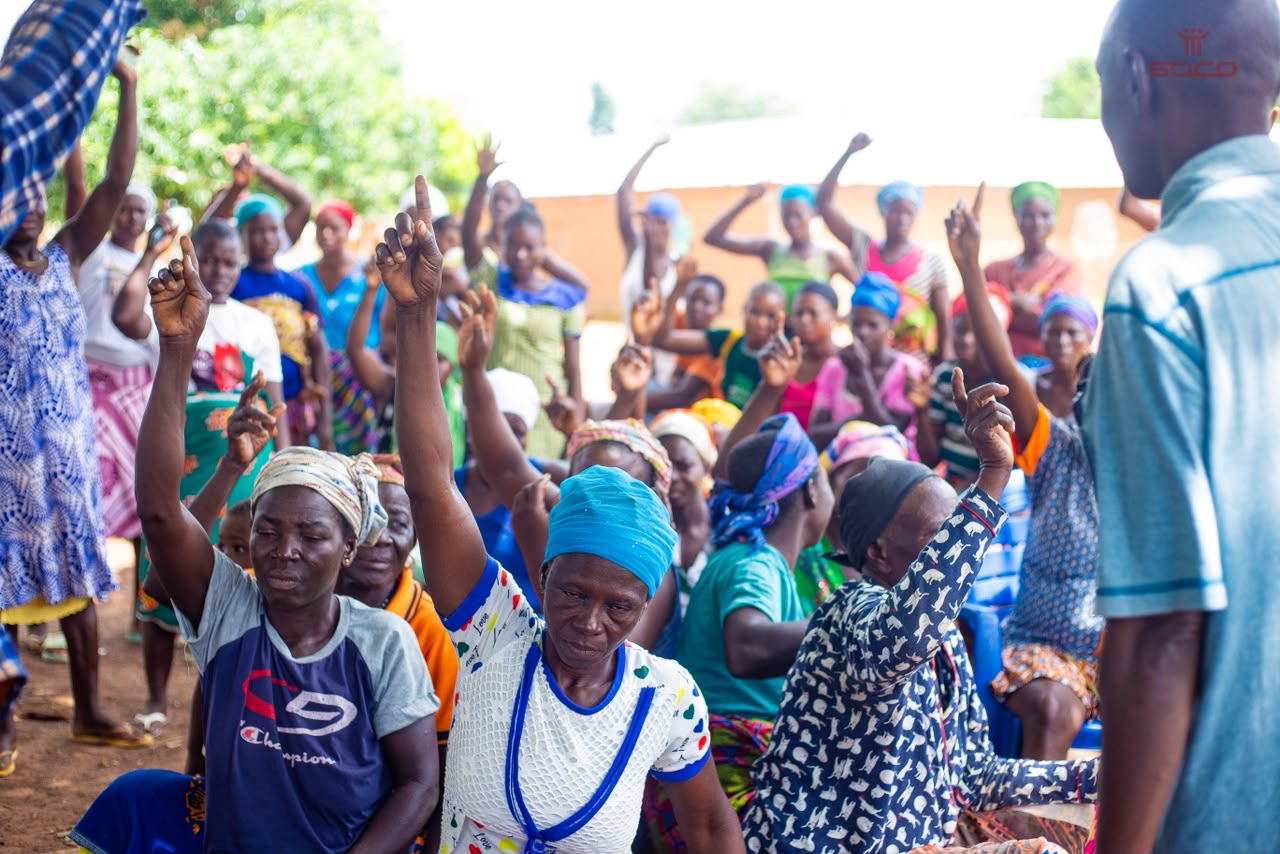
The discussion moved to how these changes are affecting people within their communities. When harvests are poor, families struggle. When income drops, daily needs become difficult to meet. “When farming is not good, people start to struggle,” Andani said. “Some young people leave to look for work elsewhere. Some move to other communities. It changes things.” Participants explained that migration is becoming more common. Young people leave to find work, while those who stay behind deal with reduced income and fewer opportunities.
There were also concerns about pressure on land and water. As resources become limited, small issues can turn into disagreements. A participant from Togo said, “When resources are not enough, people begin to compete more. That is when problems start.” The discussion showed clearly that climate change is affecting more than farming. It is affecting how people live, how they earn a living, and how communities function.
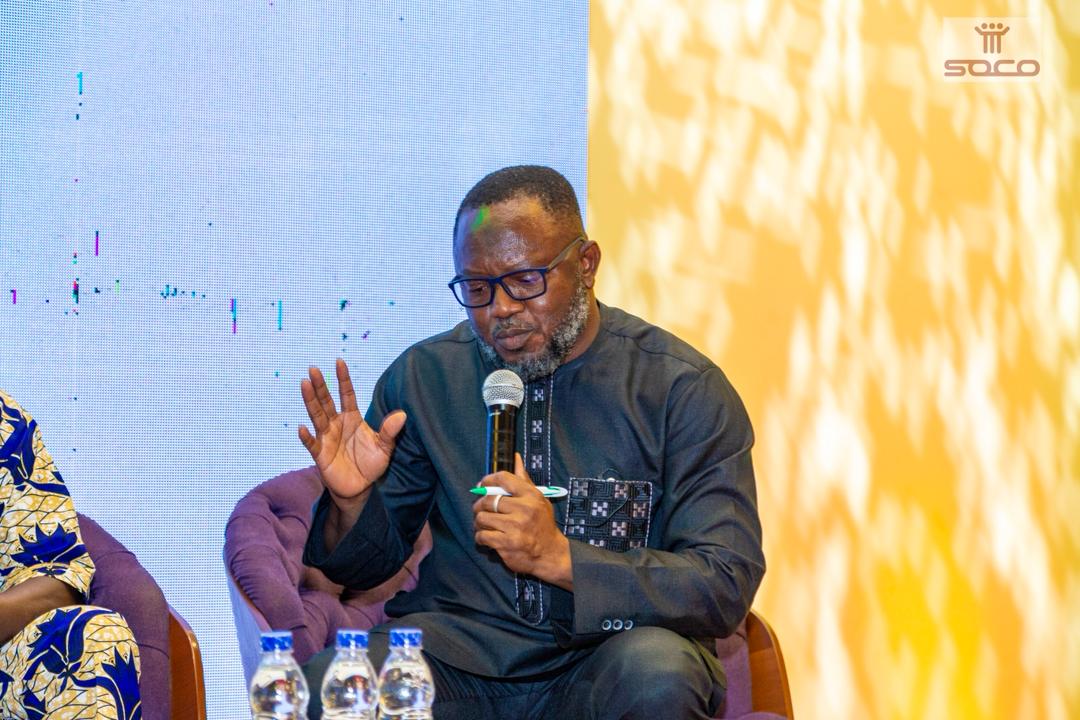
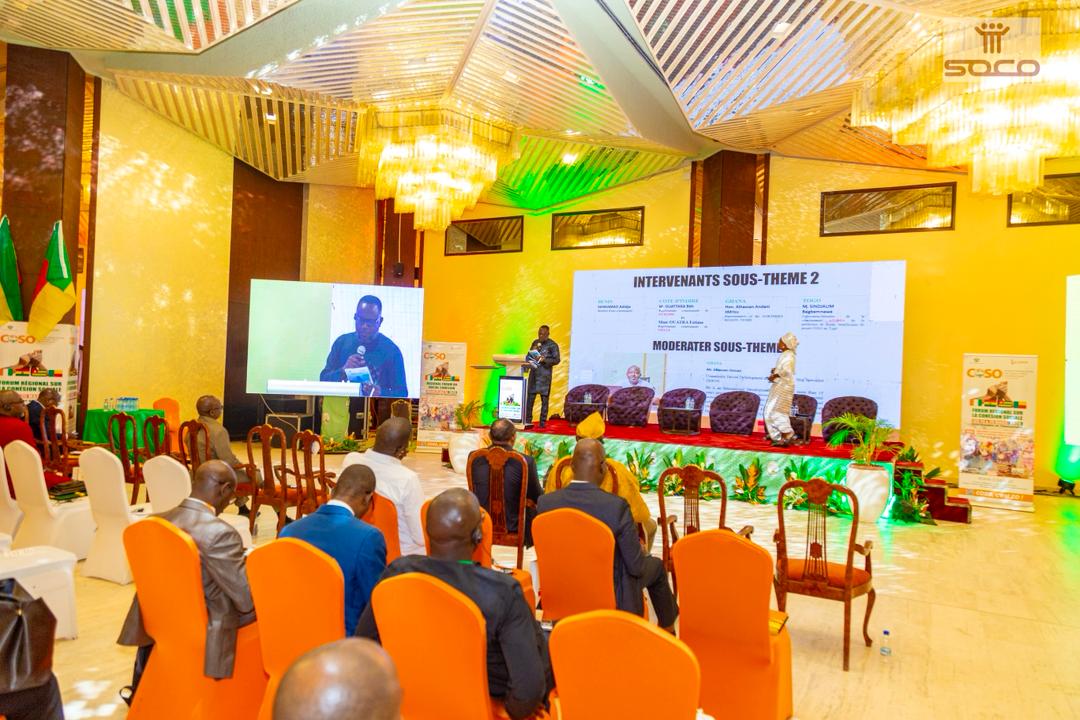
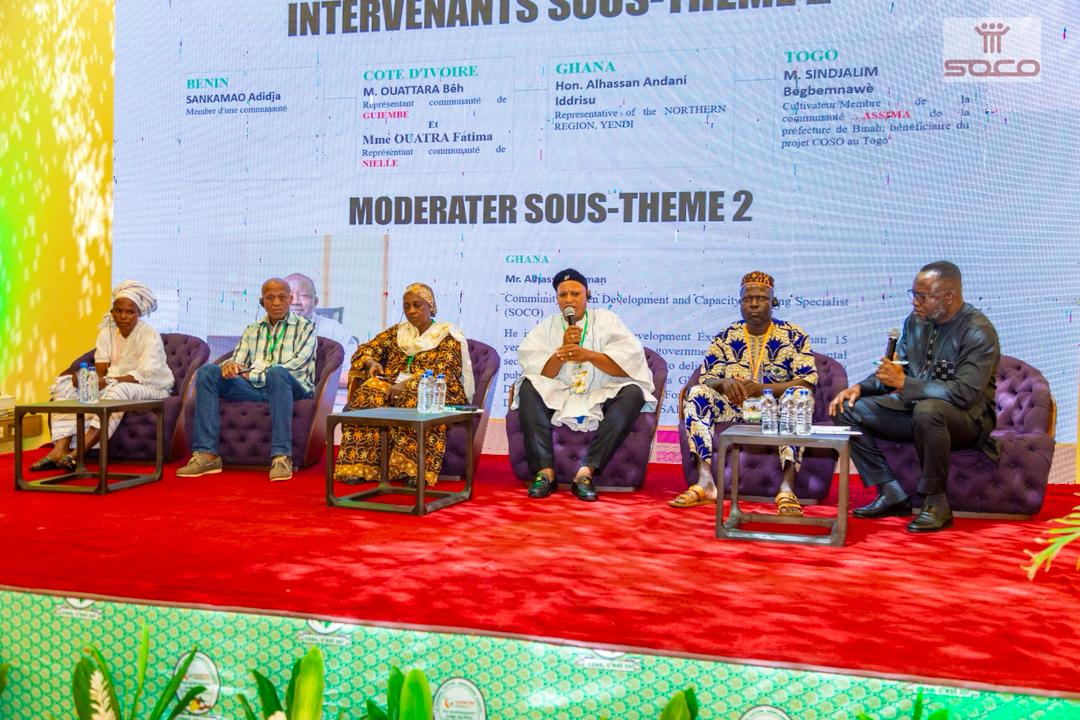
At the same time, community members spoke about how they are trying to cope. Some are changing planting periods. Others are trying different crops. In some places, people are working together to manage resources better. Andani spoke about the support his community has received. “The project has been educating us,” he said. “We are learning better ways to manage our farming activities, how to respond when the rains delay, and how to make decisions based on the changing weather. The sensitisation has helped us to understand what is happening and how to adjust.”
The session ended with a shared understanding that communities are already adjusting, but the challenges are growing. Participants stressed the need for continued support, practical solutions, and collaboration across countries. What came out strongly from the discussion was simple: climate change is already affecting lives in these communities. Farmers are dealing with it every season. Families are adjusting to it every day. And for many, everything still depends on one thing: when the rains will come, and whether they will last.