
Climate change, livelihood pressures, and cross-border risks dominated discussions at the SOCO Regional Conference held from 23rd to 26th March 2026 in Yamoussoukro, Côte d’Ivoire. The meeting brought together implementing countries under the SOCO Project to assess emerging threats in border communities and strengthen collaboration on prevention, early response, and resilience.
In his remarks, Ghana’s Minister for Local Government, Chieftaincy and Religious Affairs, Hon. Ahmed Ibrahim, drew attention to the growing link between climate pressures and vulnerability in border communities. He explained that erratic rainfall, prolonged dry spells, and flooding are already affecting farming, trading, and local economies across the northern belt. According to him, when climate conditions disrupt livelihoods, the immediate impact is reduced household income, rising poverty, and limited economic opportunities, particularly for young people.


He noted that these pressures can quickly translate into unemployment and displacement. As livelihoods shrink, many young people move in search of work, often across borders. Where opportunities are limited, such movements may increase exposure to recruitment by criminal networks or extremist groups. The Minister stressed that climate change, therefore, cannot be treated only as an environmental issue, but also as a driver of economic stress and social instability within vulnerable communities.
The Minister further indicated that climate shocks also place pressure on land, water, and grazing areas. In communities where resources are already limited, this can heighten competition and weaken social cohesion. He explained that without deliberate investment in livelihoods, infrastructure, and inclusive local governance, these pressures could deepen inequalities and increase tensions.


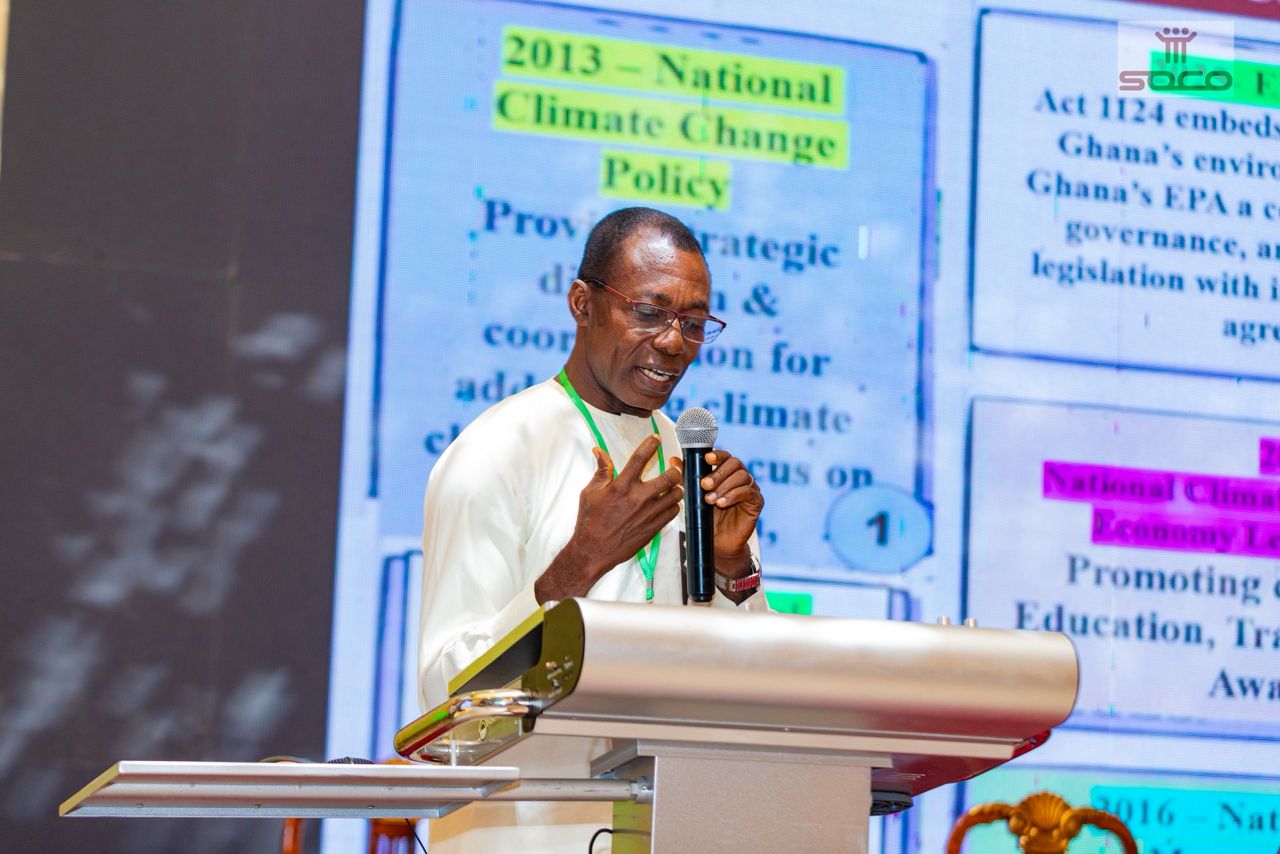
Technical presentations from the SOCO Project Ghana reinforced these concerns. Mr. Peter Poreku’s study highlighted how climate variability is already influencing migration patterns and shaping social relations across northern Ghana. Dr. Emmanuel Tachie-Obeng’s policy presentation outlined projections of rising temperatures, reduced rainfall reliability, and increasing climate shocks, and how these trends may further affect agriculture, food security, and employment.
Hon. Ahmed stressed that addressing these risks requires stronger regional collaboration. Border communities share ecosystems, migration routes, and economic ties, making coordinated responses essential. He encouraged participating countries to strengthen incident reporting, share climate and migration data, and make active use of the Knowledge Management Platform to monitor trends and guide decision-making.


He also highlighted the role of the SOCO Project in reducing vulnerability. Investments in water systems, market infrastructure, schools, health facilities, and livelihood support, he explained, help communities withstand shocks and maintain stability. Expanding these interventions across border districts, he noted, will help reduce climate-related pressures and support peaceful coexistence.
By the close of the conference, participants agreed on the need to strengthen climate-responsive planning, improve early warning systems, deepen collaboration across borders, and support youth employment as part of resilience building. The discussions in Yamoussoukro, therefore, placed climate change at the centre of regional cooperation, with a clear focus on preventing vulnerability before it evolves into instability. cooperation under the SOCO Project.